



Cancer is predominantly a disease of aging, yet the biological mechanisms by which aging promotes tumor progression, therapeutic resistance, and metastatic relapse remain poorly understood. Cancer cells dynamically adapt to environmental pressures imposed by aging, immune surveillance, metabolism, and therapy. The Gomes Laboratory investigates how aging-associated signals reshape cancer cell identity, epigenetic state, metabolic fitness, therapy sensitivity and metastatic potential.
Aging-Associated Reprogramming and Tumor Evolution
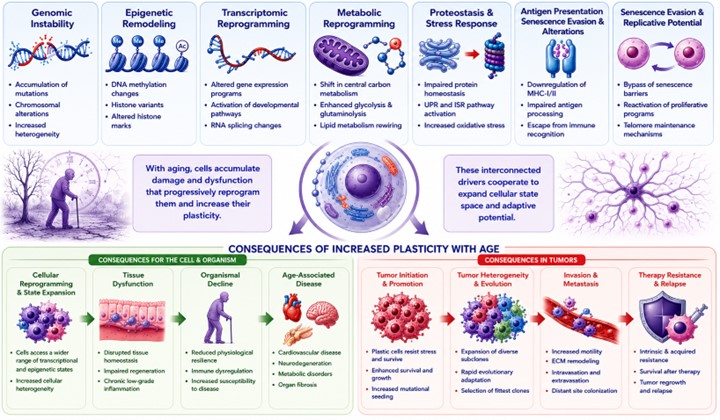
Cancer progression requires dynamic changes in cellular identity, chromatin organization, transcriptional state, and metabolic function. We investigate how aging-associated environments reshape cancer cell behavior to promote stem-like, invasive, dormant, and therapy-resistant states during tumor progression and metastasis. Our work focuses on understanding how epigenetic regulation, metabolic adaptation, stress-response pathways, and microenvironmental signaling cooperate to control tumor cell plasticity and metastatic competence. We are particularly interested in pathways involved in cell-state transitions, including NOTCH and LIF signaling, antigen presentation programs, and mechanisms regulating immune evasion and dormancy. By understanding how aging reshapes cancer cell identity and fitness, we aim to uncover mechanisms driving metastatic progression, therapeutic resistance, and metastatic awakening.
Dormancy and Metastasis
Disseminated cancer cells can persist silently within distant organs for years before reactivating to form metastatic disease. We study how cancer cells transition into and out of dormant states and how aging-associated environments influence metastatic awakening and relapse. Our work also investigates age-induced essential features of metastatic colonization, how they differ across metastatic sites, and ultimately develop effective treatment paradigms for older patients with metastatic disease.
Antigen Presentation and Immune Evasion
In collaboration with the Jaeger and Cleveland labs at Moffitt, we study how aging reshapes antigen presentation programs and tumor-immune interactions that influence immune recognition and immune escape. We are particularly interested in understanding how metabolic programs regulate MHC expression, antigen presentation, and anti-tumor immunity during cancer progression.
Age-Induced Drug Resistance Mechanisms
Older patients frequently exhibit reduced responses to cancer therapies, yet the biological mechanisms underlying age-associated therapeutic resistance remain poorly understood. We investigate how aging-associated microenvironments and systemic signals promote resistance to chemotherapy, targeted therapies, and immunotherapy. Our work focuses on identifying how aging reshapes stress-response pathways, cell-state transitions, and survival programs that enable tumor cells to evade therapeutic elimination to identify therapeutic strategies that can improve efficacy of standard of care treatments tailored to older patients.
Aging and Metabolic Adaptation in Cancer Cells
Cancer cells must continuously adapt their metabolism to survive within their tissue of origin and metastatic environments. We study how aging-associated changes in nutrient availability, inflammatory signaling, and tissue physiology alter mitochondrial function, redox balance, and metabolic dependencies within tumor cells. Our research aims to understand how aging rewires cancer cell metabolism to support metastatic progression, dormancy escape, and therapy resistance.
Questions We Are Interested In